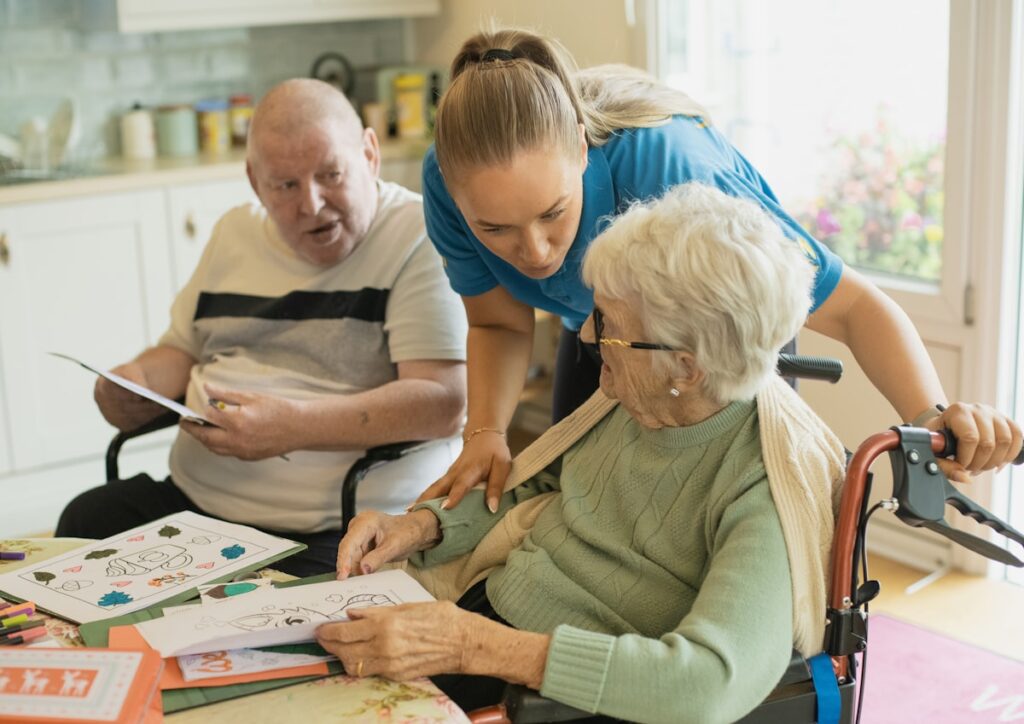
Caring for a parent with dementia at home is one of the most challenging and emotionally complex things a family will ever do. If your loved one has been diagnosed with Alzheimer’s disease or another form of dementia, you may be wondering: can they really stay at home safely? And how long can we manage this as a family?
The honest answer is that with the right dementia home care support in place, many seniors with dementia can live comfortably and safely at home for much longer than families expect — and with a far better quality of life than a care facility can often provide. At Calm Coast Homecare Inc., we support families throughout Burlington, Oakville, Milton, and Hamilton who are navigating dementia care every day. This guide is for you.
Understanding Dementia: What You’re Actually Dealing With
Dementia is not a single disease — it’s an umbrella term for a range of conditions that cause progressive cognitive decline. Alzheimer’s disease is the most common form, accounting for roughly 60–70% of cases. Other types include vascular dementia, Lewy body dementia, and frontotemporal dementia.
What they all have in common is that they change the way a person thinks, remembers, communicates, and eventually manages daily tasks. The progression is gradual but relentless, and each stage brings new challenges for families.
Understanding which stage your loved one is in helps you plan the right level of care:
Early-stage dementia
Your loved one is still largely independent but may be forgetting appointments, struggling to find words, or getting confused with complex tasks like finances. At this stage, a few hours of companionship and check-in care each week can make a significant difference — and helps establish a routine and a trusted caregiver relationship before care needs intensify.
Mid-stage dementia
This is typically when families feel the most pressure. Your loved one may be getting lost in familiar places, needing help with personal hygiene, experiencing sleep disturbances, and showing behavioural changes like agitation or repetition. Daily professional support becomes essential at this stage.
Late-stage dementia
Communication becomes very limited, and your loved one needs full assistance with all activities of daily living. Around-the-clock care — whether through live-in care, overnight care, or a combination — is typically required. Our overnight care and live-in services are specifically designed to meet these needs while keeping your loved one in the comfort of home.
The Benefits of Dementia Home Care Over a Memory Care Facility
Many families assume that a diagnosis of dementia automatically means a move to a memory care facility. In fact, research consistently shows that familiar environments are deeply beneficial for people living with dementia.
When a person with dementia remains at home, they benefit from:
- Familiar surroundings — their own home, their own routines, and their own belongings provide anchors that reduce anxiety and confusion
- One-on-one attention — a dedicated caregiver gives your loved one undivided focus that a busy facility simply cannot replicate
- Continuity of care — consistent caregivers build trust and learn your loved one’s individual patterns, preferences, and triggers
- Family involvement — staying at home keeps your loved one close to the people who matter most
- Slower cognitive decline — some studies suggest that continued engagement with a familiar environment and personal relationships may slow the progression of symptoms
Practical Tips for Caring for a Parent With Dementia at Home
Whether you’re managing care on your own or working alongside a professional caregiver, these strategies make a meaningful difference in daily life.
Create and protect routines
People with dementia rely heavily on predictable routines to feel safe and oriented. Try to keep mealtimes, bathing, and bedtime as consistent as possible. Even small disruptions — a cancelled visit, a changed schedule — can cause significant distress. When you do need to change something, introduce it gradually and calmly.
Adapt the home environment for safety
A few straightforward modifications can dramatically reduce the risk of falls, wandering, and accidents:
- Install door alarms or locks on exterior doors to prevent wandering
- Remove clutter and loose rugs that create fall hazards
- Add grab bars in the bathroom and near the bed
- Label drawers, cupboards, and rooms with simple pictures or words
- Secure or remove dangerous items such as sharp knives, cleaning products, and medications
- Use nightlights in hallways and the bathroom to reduce nighttime confusion
Communicate with patience and simplicity
The way you communicate with someone living with dementia matters enormously. Speak slowly and clearly, using simple sentences. Ask one question at a time. If they don’t understand, try rephrasing rather than repeating the same words. Avoid correcting or arguing — if your mum insists it’s 1985, gently redirect rather than contradict. Meeting your loved one where they are emotionally is far more effective than trying to bring them back to your reality.
Manage sundowning
Sundowning refers to increased confusion, agitation, or restlessness that occurs in the late afternoon and early evening — a common and particularly difficult symptom of mid-to-late stage dementia. Helpful strategies include keeping the home well-lit in the evening, maintaining a calm environment, offering a light snack, and establishing a consistent wind-down routine. Having a professional caregiver present during these hours can be transformative for families.
Plan for medication management
Medication errors are extremely common with dementia. A person in mid-stage dementia may forget they’ve taken their medication and take a double dose, or refuse medication entirely. A caregiver who provides consistent medication reminders — or who is trained to assist with medication — removes this risk entirely and gives families enormous peace of mind.
The Caregiver Burden: Taking Care of Yourself Too
If you are the primary caregiver for a parent with dementia, this section is for you.
Caregiver burnout is real, it is common, and it is serious. Caring for someone with dementia is emotionally exhausting — the grief of watching a parent change, the disrupted sleep, the relentless demands on your time and emotional reserves. Many family caregivers sacrifice their own health, relationships, and careers in the process, and this is not sustainable.
Respite care exists precisely for this. Our respite care services allow family caregivers to take a planned break — whether for a few hours, a day, or a longer period — while knowing their loved one is in safe, compassionate hands. Taking regular breaks is not a luxury or a sign of weakness. It is essential to sustaining the care you provide over the long term.
We also strongly encourage family caregivers to connect with the Alzheimer Society of Canada and local support groups in Burlington and Halton Region. You should not be doing this alone.
How Calm Coast Supports Families Living With Dementia
Our caregivers are specifically matched to clients living with dementia based on temperament, communication style, and experience. We don’t just send anyone — we take the time to find the right person for your loved one, because consistency and trust are everything in dementia care.
Our dementia care services in Burlington and Halton Region include:
- Companionship and meaningful engagement throughout the day
- Personal care assistance with bathing, grooming, and dressing
- Medication reminders and safety monitoring
- Meal preparation tailored to your loved one’s preferences
- Sundowning support and overnight care
- Respite care to support family caregivers
- Regular communication with your family so you always know how things are going
We also work closely with your loved one’s medical team, local home and community care coordinators, and other healthcare providers to ensure care is fully coordinated.
When Is It Time to Consider a Memory Care Facility?
We believe strongly in helping families keep their loved ones at home for as long as it is safely possible. But we also believe in being honest. There are situations where a memory care facility may become the right choice — particularly when a person reaches late-stage dementia and requires a level of continuous medical supervision that even the best home care cannot provide.
That transition, if and when it comes, does not have to happen abruptly. Many families use our care services as a bridge — keeping a loved one at home longer while a facility placement is being arranged, or even bringing in private caregivers to supplement facility care after the move.
Let’s Talk About Your Family’s Situation
Every family’s experience with dementia is different, and there’s no single right path. What we can offer is a compassionate, experienced perspective and a commitment to supporting your loved one with genuine care and dignity.
Book a free in-home assessment with one of our Calm Coast care coordinators. We’ll visit your loved one’s home, take the time to understand their needs and your family’s situation, and build a care plan that truly fits — with no pressure and no obligation. Serving Burlington, Oakville, Milton, Hamilton, and across Halton Region.